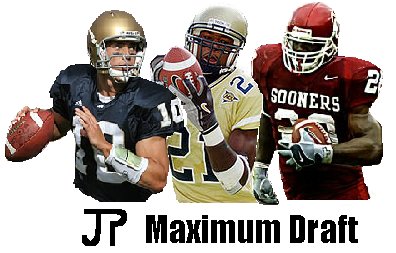
1. Calvin Johnson*, Georgia Tech
6’5” 239; 4.35
Statistics: 76rec; 1,202yds; 15TDs
Positives: Everything. Imagine a WR with Randy’s athletic ability, T.O.’s size/strength, Larry Fitzgerald’s hands and attitude, and you’ve got Calvin. I’ve been his biggest fan since his freshman year, but since he gets enough praise already I’ll stop there.
Negatives: It’s hard to find ‘em. He could run better routes and is faster than he is quick. Drops some easy passes occasionally, loses concentration at times. He didn’t show up in a couple big games this year, but that was mainly because of Reggie Ball’s erratic play.
Best Case: See Above
Worst Case: Andre Johnson earlier in his career

2. Ted Ginn Jr*, Ohio St
5’11” 178; 4.38
Statistics: 59rec; 781yds; 9TDs; 1retTD
Positives: His speed, quickness, and playmaking ability are second to none. He has a ton of upside as a returner, and a switch to DB is still possible. Hands are underrated in my opinion; a deep threat that makes good cuts in his routes and doesn’t lose speed.
Negatives: He’s not very big or strong, and his slow comeback from a high ankle sprain brings up some serious durability concerns. Not real polished as a receiver, could run better routes, concentration comes and goes, leading to some drops.
Best Case: Joey Galloway in his prime
Worst Case: Bethel Johnson

3. Dwayne Jarrett*, USC
6’4” 219; 4.62
Statistics: 70rec; 1,015yds; 12TDs
Positives: He’s tall, has long arms, can jump, and makes some spectacular catches with his huge, soft hands. Has a lot of potential as a red zone threat. Big time playmaker in college that really stepped it up when the lights came on.
Negatives: The “Mike Williams” comparisons are really damaging his stock. He doesn’t have ideal top speed and failing to break 4.6 on a fast track hurt him, after not running at the combine. Work ethic and character have been questioned, doesn’t always go 100%.
Best Case: Plaxico Burress
Worst Case: Mike Williams

4. Robert Meachem*, Tennessee
6’2” 214; 4.39
Statistics: 71rec; 1,281yds; 11TDs
Positives: He has all the measurables that scouts look for, excellent speed for his size, great runner after the catch. Followed a breakout junior season with an excellent showing at the combine. Has a ton of potential, but his high bust potential keeps him from being the #2 WR in my opinion.
Negatives: He needs to improve his routes and doesn’t really look like a 4.3 guy on the field. Was a bit of a disappointment prior to his junior season, which raises the one-year-wonder question. Doesn’t play tough and looks a little hesitant over the middle.
Best Case: Poor man’s Roy Williams
Worst Case: David Terrell

5. Sidney Rice*, South Carolina
6’4” 200; 4.51
Statistics: 72rec; 1,090yds; 10TDs
Positives: He has a knack for reaching the end zone; his 23 TDs in 2 years at SC broke the school record. His height, long arms, soft hands, and hops make him a prime jump ball target. Good character, team player, works hard and doesn’t quit.
Negatives: He doesn’t have great bulk, strength, or timed speed. He could improve his routes, runs lazy in and out of his cuts at times. Might have trouble blocking at the next level with his somewhat slight frame.
Best Case: Smaller Marques Colston
Worst Case: Billy McMullen

6. Dwayne Bowe, LSU
6’2” 221; 4.51
Statistics: 65rec; 990yds; 12TDs
Positives: Big, smooth athlete that really stepped it up in his senior year. Excellent over the middle, blocks like a TE and is a team player. Impressed everyone in attendance at the Senior Bowl practices. Improved his hands greatly over his career, good runner after the catch.
Negatives: As improved as his hands are, they don’t look real natural or soft and he lets some passes get into his body. Doesn’t have ideal top end speed or a second gear in the open field, not much of a deep threat. A safe pick, but I don’t think he’ll be a star.
Best Case: Muhsin Muhammad
Worst Case: Derrius Thompson

7. Joel Filani, Texas Tech
6’2” 211; 4.55
Statistics: 91rec; 1,300yds; 13TDs
Positives: He’s a big, strong, possession receiver that goes over the middle and run after the catch. Has ideal size and frame, a playmaker in college that stepped it up in the big games. Was projected to go day 2 when everyone thought he ran a 4.7, but the 4.55 really helped him. He’s one of my favorite players in the draft.
Negatives: He doesn’t have real natural hands and looks mechanical at times. Had a severe case of the drops earlier in his career, and he still drops some easy ones. Doesn’t have great top speed or quickness.
Best Case: Poor man’s Terrell Owens
Worst Case: Kelley Washington

8. Jason Hill, Washington St
6’1” 204; 4.32
Statistics: 41rec; 600yds; 7TDs
Positives: He’s got a sturdy frame, strong hands, and excellent timed speed. Top speed was considered his weakness before the combine, then he ran a 4.3. Good acceleration and burst off the line, knows how to get open and has natural receiving instincts.
Negatives: He doesn’t play as fast as his timed speed would indicate, lacks a second gear in the open field. Could improve the little parts of his game, like his routes and blocking. Hands aren’t especially reliable, had a very average senior season.
Best Case: David Givens
Worst Case: Taylor Jacobs

9. Anthony Gonzalez*, Ohio St
6’0” 193; 4.44
Statistics: 51rec; 734yds; 8TDs
Positives: He’s a very safe pick, excellent character and work ethic, gets the most out of his abilities. Quickness is second to none, decent top speed and runs very consistent routes. Has reliable hands and all the tools to develop into a solid #2 receiver.
Negatives: His limited size and strength will likely prevent him from ever becoming a star. Won’t break any tackles after the catch and lacks the overall upside of some of the other top receivers in this year’s class.
Best Case: Isaac Bruce
Worst Case: Keary Colbert

10. Steve Smith, USC
6’0” 197; 4.44
Statistics: 71rec; 1,083yds; 9TDs
Positives: Another safe pick that lacks great potential, he has all the tools to develop into a solid contributor. He has reliable hands, routes, very consistent and productive at the college level. Strong for a guy his size and has no trouble getting off the jam.
Negatives: He never really jumped out at me when watching him. He’s a solid, but not great receiver that lacks the size and overall athletic ability to develop into a #1. He doesn’t look as fast as his time would suggest, was never a true #1 in college.
Best Case: Brandon Lloyd w/49ers
Worst Case: B.J. Johnson

11. Aundrae Allison, ECU
6’0” 198; 4.39
Statistics: 62rec; 708yds; 4TDs
Positive: He’s an excellent athlete with ideal separation speed, acceleration, and a second gear in the open field. Has a ton of unrealized potential. Fluid runner after the catch, has good routes when he wants to and possesses a knack for making spectacular catches.
Negatives: He lacks ideal size and strength and appears a bit hesitant going over the middle. Hasn’t fulfilled his potential in college, which brings up some work ethic questions. Boom or bust guy that will be as good as he wants to be.
Best Case: Donte Stallworth
Worst Case: Tim Carter

12. Jacoby Jones, Lane
6’3” 210; 4.50
Statistics: 68rec; 822yds; 6TDs; 3retTDs
Positives: Upside and potential are his two main strengths. Excellent top speed and elusiveness for a guy his size, at the least he’ll be a solid kick returner. Former basketball player, times his jumps well and his long arms help. Runs good routes when he has to.
Negatives: He doesn’t like going over the middle and shies away from contact way too often. Hands are very small for a guy his size, and inconsistent, to say the least, loses focus way too much. Level of competition is a pretty big concern.
Best Case: Javon Walker
Worst Case: Darrell Hill

13. Johnnie Lee Higgins, UTEP
5’11” 186; 4.48
Statistics: 82rec; 1,319yds; 13TDs
Positives: He’s very explosive and has upside as a slot receiver and returner. Playmaker, good instincts in the receiving game as well as the return game. Tries his hardest, very tough and not afraid to go over the middle, runs hard and can break some tackles.
Negatives: He just doesn’t have the size or speed to develop into a starting wideout, needs to show better concentration, hands are inconsistent. Lacks ideal second gear and tops out too quickly while running downfield. Doesn’t have a ton of potential.
Best Case: Laveranues Coles
Worst Case: Peter Warrick

14. Matt Trannon, Michigan St
6’6” 216; 4.57
Statistics: 44rec; 518yds; 4TDs
Positives: Excellent size and strength for a receiver, knows how to use his body to shield defenders, has the potential to develop into a prime jump ball target. Ran a faster time than expected, is a long strider with deceptive speed. Played basketball for the Spartans.
Negatives: He doesn’t have great burst, quickness, or acceleration and really needs to work on his routes. Won’t make anybody miss in the open field and lacks the second gear to run away from people. His hands are inconsistent, drops some easy passes but makes some acrobatic catches.
Best Case: Ernest Wilford
Worst Case: Kassim Osgood

15. Yamon Figurs, Kansas St
5’11” 174; 4.30
Statistics: 28rec; 418yds; 3TDs; 2rushTDs; 2retTDs
Positives: His speed, burst, and acceleration are second-to-none. He’s an excellent runner in the open field, tons of upside as a returner. Saves his best for the big games, very explosive and makes some amazing plays.
Negatives: He doesn’t have ideal bulk or strength to be much more than a #3, slot WR and a punt returner. Won’t break a whole lot of tackles, drops some passes and lacks ideal receiving instincts, runs inconsistent routes.
Best Case: Dante Hall
Worst Case: Mark Jones

16. Rhema McKnight, Notre Dame
6’1” 211; 4.53
Statistics: 67rec; 907yds; 15TDs
Positives: Smooth, fluid athlete with big, soft hands and the body control to make tons of acrobatic catches. Strong and sturdy, not afraid to take a hit, solid character guy with an excellent work ethic. Had a very productive senior season after a rollercoaster career.
Negatives: He doesn’t have the speed or consistency to warrant a 1st day pick. Has had some pretty serious knee problems, which is a big red flag to many teams. Doesn’t have very reliable hands and drops some easy passes.
Best Case: Jimmy Smith
Worst Case: Rashaun Woods

17. Craig Davis, LSU
6’1” 200; 4.41
Statistics: 56rec; 836yds; 4TDs
Positives: He has the tools to develop into a starter. Has a very good combination of speed and strength, not afraid to go over the middle. A big play that can get separation against some of the best corners and also has upside as a kick returner.
Negatives: I don’t really like him as much as some people do. Scouts drool about his speed, but he runs a little mechanically and doesn’t show great burst in his routes. His hands aren’t real natural, has potential, but that word gets over hyped on draft day.
Best Case: Bernard Berrian
Worst Case: Ken-Yon Rambo

18. Courtney Taylor, Auburn
6’2” 204; 4.50
Statistics: 54rec; 704yds; 2TDs
Positives: He’s a big, strong receiver with the hands and consistency to be a solid possession receiver and special teams contributor. Ran much faster at the combine than expected, makes big plays when the stakes are high, excels on jump balls.
Negatives: He doesn’t play near as fast as his 4.5 time would suggest, lacks the explosiveness and quickness to be a starter. Doesn’t have the potential of many other prospects. Average senior season, has had some injuries in college.
Best Case: Justin McCareins
Worst Case: Sam Aiken

19. Mike Walker, UCF
6’2” 209; 4.35
Statistics: 90rec; 1,178yds; 7TDs
Positives: His 4.35 time helped him a lot. Was looked at as mainly a “possession” guy that would run in the 4.6’s prior to the combine. Runs good routes, shows reliable hands and an ability to go over the middle. Smart, hard worker that even played some CB.
Negatives: He doesn’t play as fast as his time would suggest, did the majority of his damage against sub-par teams last season. He’s a little raw, relatively inexperienced. Needs to improve as a blocker, not much of a playmaker after the catch.
Best Case: Eddie Kennison
Worst Case: Darius Watts

20. Paul Williams, Fresno St
6’1” 205; 4.45
Statistics: 21rec; 229yds; 1TD
Positives: He has all of the tools to be a star, including a rare combination of size, speed, and overall athletic ability. Runs very well after the catch, excellent on deep routes thanks to his second gear and jump ball ability. He has tons of upside.
Negatives: The perfect example of a boom or bust prospect. His performances in the postseason may move him into the 1st day, but he had a terrible senior season. His desire and work ethic have been questioned, for good reason. His hands are inconsistent, runs poor routes and has had some injuries in college.
Best Case: Jerry Porter in his prime
Worst Case: Devard Darling

21. Dallas Baker, Florida
6’3” 208; 4.53
Statistics: 60rec; 920yds; 10TDs
Positives: He has the frame to get bigger, with long arms and soft hands. Excellent in the red-zone, times jumps very well and can go up for it in traffic. Faster than he is quick, a long strider with deceptive speed that helps him get deep occasionally.
Negatives: He doesn’t have much burst, acceleration, or quickness. Needs to add strength to improve as a blocker and doesn’t like going over the middle.
Best Case: Amani Toomer
Worst Case: John Standeford

22. David Clowney, Virginia Tech
6’0” 188; 4.36
Statistics: 34rec; 424yds; 0TDs
Positives: His speed and quickness are up there with the best. Could contribute as a punt returner in the future. Excellent burst off the line, solid runner after the catch, runs with good vision and instincts. Has reliable hands and is tough for a guy his size.
Negatives: Had a very disappointing senior season, but that was mainly due to inconsistent QB play. Lacks the ideal size/strength to develop into a starter. Durability is a concern, and he doesn’t have any meaningful return experience.
Best Case: Poor man’s Terry Glenn
Worst Case: Troy Edwards

23. Chris Davis, Florida St
5’10” 181; 4.50
Statistics: 49rec; 684yds; 4TDs
Positives: He has all the tools to be an excellent slot receiver and a special teams demon. Quicker than he is fast, great burst off the line and changes directions without slowing down. Hands are big for a guy his size, wins a surprising amount of jump balls for a guy his size. Has potential as a punt returner.
Weaknesses: He’s very small and lacks ideal upside. Top end speed is just average and his lack of a second gear hurts him as a returner and runner after the catch. Not very strong, doesn’t go over the middle much and can be pushed around by DB’s.
Best Case: Tim Dwight
Worst Case: Triandos Luke

24. Laurent Robinson, Illinois St
6’2” 199; 4.38
Statistics: 40rec; 718yds; 7TDs
Positives: Here’s another guy that was thought to be more of a “possession” WR that helped himself a ton by timing in the 4.3’s at the combine. He has the frame to add bulk, reliable hands and is a very skilled route runner. He’s a smart, hard worker with good character and the desire to be great.
Negatives: Lacks ideal strength and bulk, played against inferior competition and his transition to the NFL may take some time. More of a long strider in the open field, won’t make many people miss or break a whole lot of tackles. Durability is a minor concern.
Best Case: Bigger Kevin Curtis
Worst Case: Quincy Morgan

25. Brandon Myles, West Virginia
6’1” 189; 4.41
Statistics: 32rec; 522yds; 8TDs
Positives: Long arms, reliable hands, and decent athletic ability. He times his jumps well and excels at tracking passes over his shoulder. Has the second gear to run past defenders in the open field and on his routes, is also very quick.
Negatives: He’s too thin and not strong enough to contribute in the NFL right away. Raw overall technique and didn’t get a whole lot of passes thrown his way in college because of WVU’s running offense. Needs to work on his routes and plays timid at times.
Best Case: Ike Hilliard in his prime
Worst Case: Cliff Russell

26. Legedu Naanee, Boise St
6’2” 225; 4.41
Statistics: 35rec; 541yds; 6TDs
Positives: His combination of size, timed speed, and strength are very rare. Has a ton of upside. Former QB, smart, hard worker that always gives 100%. He’s very raw, but his excellent work ethic helps lower his bust chances.
Negatives: He doesn’t play as fast as his time would suggest, has trouble getting open against top CB’s and needs to improve routes. Slows down too much to cut and is slow out of them. He runs mechanical at times, doesn’t have real natural hands.
Best Case: Doug Gabriel
Worst Case: Karl Hankton

27. Maurice Price*, Charleston Southern
6’1” 200; 4.52
Statistics: 103rec; 985yds; 10TDs
Positives: He has the size, hands, athleticism, and consistency to be a solid producer. Excellent leaper, explosive, he’s quicker than he is fast. Played well at the Texas vs. the Nation Game, entered the draft as an underclassman, which is sometimes a plus in the later rounds of day 2.
Negatives: He does everything well, but nothing great. Lacks ideal top end speed and may have trouble separating at the NFL level. Not much of a threat after the catch. Dominated against inferior competition, has little to no experience against top CB’s.
Best Case: T.J. Houshmandzadeh
Worst Case: J.R. Tolver

28. Steve Breaston, Michigan
29. David Ball, Northeastern
30. James Jones, San Jose St
31. Roy Hall, Ohio St
32. Johnathan Holland, Lousiana Tech
33. D’Juan Woods, Oklahoma St
34. Chansi Stuckey, Clemson
35. Ryne Robinson, Miami (Ohio)
36. Jordan Kent, Oregon
37. Biren Ealy, Houston
38. Jarrett Hicks, Texas Tech
39. Brad Ekwerekwu, Missouri
40. Ryan Moore, Miami
41. Jemalle Cornelius, Florida
42. Bret Smith, Tennessee
43. Paul Thompson, Oklahoma
44. Dorien Bryant, Purdue
45. Junior Taylor, UCLA
46. Syndric Steptoe, Arizona
47. Chad Schroeder, Texas A&M
48. Vincent Marshall, Houston
49. Dominique Zeigler, Baylor
50. Jesse Holley, North Carolina
51. Robert Johnson, Texas Tech
52. Kerry Reed, Michigan St
53. Eric Deslauriers, Eastern Michigan
54. Drisan James, Boise St
55. Onrea Jones, Hampton
56. Brandon London, UMass
57. Ean Randolph, USF
58. Mike Mason, Tennessee St
59. Jerard Rabb, Boise St
60. Chandler Williams, Fla Int’l
61. Tyrone Timmons, Miss Valley St
62. Henry Tolbert, Grambling St
63. Johnny Quinn, North Texas
64. Logan Payne, Minnesota
65. Marquay McDaniel, Hampton
66. Syvelle Newton, South Carolina
67. Terry Richardson, Arizona St
68. Jayson Swain, Tennessee
69. Carl Berman, Indiana St
70. John Broussard, San Jose St
71. Aaron Fairooz, Central Arkansas
72. Deyon Williams, Virginia
73. Derek Stanley, Wisc-Whitewater
74. Najeh Pruden, Akron
75. Chris McFoy, USC
76. Terry Moss, Ball St
77. Preston Brown, Toledo
78. Patrick Bugg, Eastern Kentucky
79. Sonny Shackelford, Washington
80. Martin Teal, Troy
81. Aaron Brown, New Hampshire
82. Tony Kays, Cal Davis
83. Jahkeen Gilmore, Indiana
84. Dereck Faulkner, Hampton
85. Prince Prempeh, Marist
86. Reggie Ball, Georgia Tech
87. Scott Mayle, Ohio
88. Willie Foster, Rutgers
89. James Finley, Oregon
90. Trent Shelton, Baylor
91. Joe Fernandez, Fresno St
92. Evan Moore, Stanford
93. Omarr Conner, Mississippi St
94. Smokey Hampton, Troy
95. Mark Bradford, Stanford
96. Nate Morton, Wake Forest
97. Akieem Jolla, New Mexico St